Guide · How it is made
An AI pet portrait, honestly
Yes, it is made by an AI. This page says exactly what that means here, because the honest answer is more useful than the impressive one.
· updated
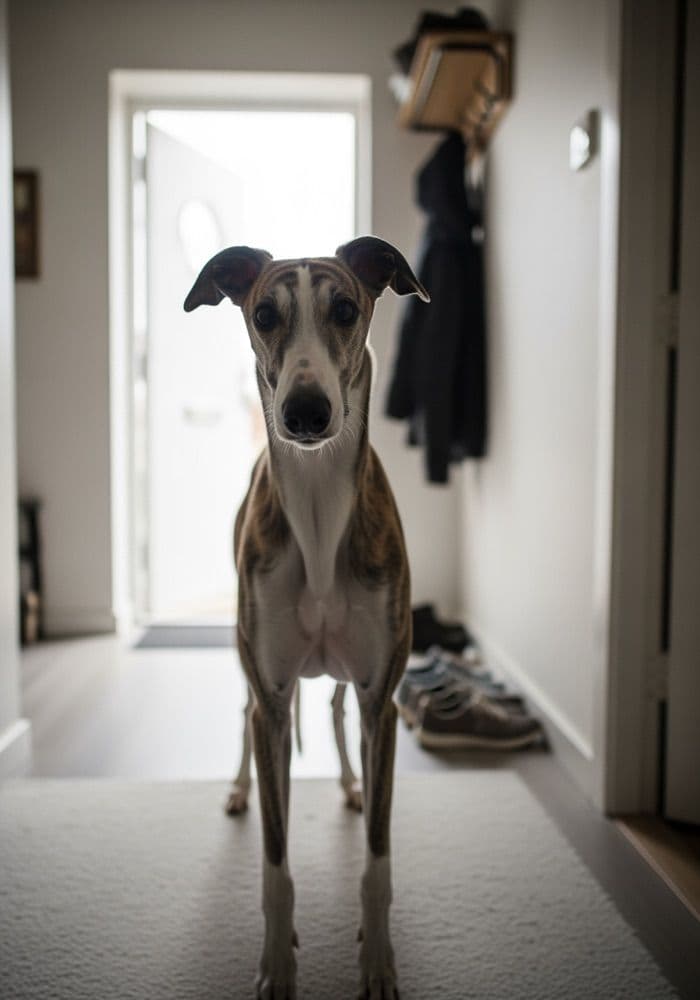
What you give the studio

What it gives back
What it is
An image model, a photograph, and a written composition.
Three things go into every painting. Your photograph, which supplies the animal — face, markings, ears, posture. A composition we wrote and tested for the place you chose: which side the light comes from, what hour it is, what is on the table, where the animal sits, what the brushwork does. And an image model that is asked to paint that composition around that animal, holding the animal as faithfully as it can.
It is not a filter over your photograph and it is not a hand-painted commission. It is a new picture, made in a minute or two, in which the only thing that existed before is your pet.
What the places add
Seventeen real addresses, not “a Moroccan street”.
Ask a general-purpose model for a dog in Marrakech and you get a plausible souk that exists nowhere. The compositions here were written for seventeen specific places on their true coordinates — Jemaa el-Fnaa at dusk, the Ben Youssef courtyard mid-morning, the Majorelle wall at its true blue — from reference photographs of each, and corrected when the model got a place wrong. A carved stone gate once came back tiled; the composition was rewritten until it did not.
Each place owns its hour and its materials. The painting styles change brushwork and mood, never the place. That separation is why the same animal can be painted in ten registers and still be standing in the same courtyard.
What happens to the photograph
Your photo stays under your control.
Your photograph is checked in your browser first, then sent to the image provider for inspection and for the painting. A copy of your current photo is saved in your browser so you can resume and request corrections; remove it in My Studio → Settings or clear this browser’s site data. Berbernest does not persist the source photo in its server storage, sell it or use it to train a Berbernest model. Browser retention is separate from processing by the image provider. The finished painting is kept: the watermarked preview for a year and, if you buy it, the clean file with your order for re-download. An unpurchased clean file is deleted after thirty days. The full wording is in the privacy policy.
What it cannot do
It cannot see what is not in the picture.
The model reads the animal from the photograph and nothing else. A hidden eye, a turned-away nose, a blurred face or a coat in the dark all give it less to hold, and it will fill the gap with a handsome guess — a more typical example of the breed than your particular one. That is the failure that matters, and it is why the photograph is the part worth two minutes.
Before a painting is spent, the studio looks at the upload once: one animal, a readable face, an animal that can stand in a place. A photograph it cannot read is refused with a reason, because painting a confident stranger and charging for it is the one thing this must never do. It is also instructed never to paint people or hands, which is why the styling options are a scarf, a strand of pearls or nothing, and never a costume.
Why you look first
You are the only judge of the likeness.
Your first two previews are free and every one of them is shown to you first, watermarked, with no card or account required. If it is not them, the box beneath it takes a sentence — her nose was black, not brown — and the painting is made again with that correction in front of it, in minutes. Corrections using the same photo and setting are free. Another photo or setting uses a new preview. Nothing is charged until you decide to keep one.
This is the honest way to sell an AI portrait: not by promising it will be right, but by making sure nothing is owed until you have said it is.
What you get
The file, and when a print is honest.
The full painting is delivered at its native 1024 × 1536 pixels, with no watermark, for €15. That is plenty for a screen, a phone, a card, a small print made at home.
A fine-art print through the studio is a different question. The smallest size, 30 × 40 cm cm, needs a 300-pixel-per-inch master to print cleanly, and the checkout measures every file against that before it will sell a print — it refuses one it cannot make well rather than upscaling and hoping. Prints open only when the artwork meets our 300 ppi standard. The digital portrait is available now. Physical sizes remain unavailable until suitable print masters are ready. The prints page says what is available today.
Why not just ask a chatbot
You can, and sometimes you should.
For a picture of a dog in a vaguely Moroccan street, a general model will do fine, and we will not pretend otherwise. Two things are different here. The places are real, built from the actual geography, each with its own hour and light — you are choosing Jemaa el-Fnaa at dusk, not “a square”. And the workflow is built around the likeness: a check before painting, a free look, free corrections using the same photo and setting, and a clean digital portrait you can keep. The download is €15 for personal use, sharing and small prints.
See it on your own pet
Upload one clear photograph, choose a place, and look at the painting before anything is owed. First two previews free, no account or card; the full-resolution file is €15.
Try it on your own photo, free